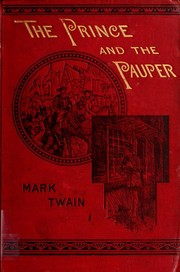
The Prince and the Pauper
Two boys — one a prince, one a pauper — switch identities and discover the realities of each other's lives in Tudor England.
As an Amazon Associate, MyBookPDF earns from qualifying purchases. The Prince and the Pauper is free to read and download here; the Amazon (print book) and Audible (free-trial audiobook) links are affiliate links and optional.
Download free (text, PDF, EPUB, Kindle)
Free, public domain, no registration. The plain text comes from this site; PDF, EPUB and Kindle files open on Project Gutenberg. Free audiobook: LibriVox.
More: The Prince and the Pauper summary · books like The Prince and the Pauper · more by Mark Twain · browse the library.
Read the opening of The Prince and the Pauper
In the ancient city of London, on a certain autumn day in the second quarter of the sixteenth century, a boy was born to a poor family of the name of Canty, who did not want him. On the same day another English child was born to a rich family of the name of Tudor, who did want him. All England wanted him too. England had so longed for him, and hoped for him, and prayed God for him, that, now that he was really come, the people went nearly mad for joy. Mere acquaintances hugged and kissed each other and cried. Everybody took a holiday, and high and low, rich and poor, feasted and danced and sang, and got very mellow; and they kept this up for days and nights together. By day, London was a sight to see, with gay banners waving from every balcony and housetop, and splendid pageants marching along. By night, it was again a sight to see, with its great bonfires at every corner, and its troops of revellers making merry around them. There was no talk in all England but of the new baby, Edward Tudor, Prince of Wales, who lay lapped in silks and satins, unconscious of all this fuss, and not knowing that great lords and ladies were tending him and watching over him--and not caring, either. But there was no talk about the other baby, Tom Canty, lapped in his poor rags, except among the family of paupers whom he had just come to trouble with his presence.
London was fifteen hundred years old, and was a great town--for that day. It had a hundred thousand inhabitants--some think double as many. The streets were very narrow, and crooked, and dirty, especially in the part where Tom Canty lived, which was not far from London Bridge. The houses were of wood, with the second story projecting over the first, and the third sticking its elbows out beyond the second. The higher the houses grew, the broader they grew. They were skeletons of strong criss-cross beams, with solid material between, coated with plaster. The beams were painted red or blue or black, according to the owner’s taste, and this gave the houses a very picturesque look. The windows were small, glazed with little diamond-shaped panes, and they opened outward, on hinges, like doors.
The house which Tom’s father lived in was up a foul little pocket called Offal Court, out of Pudding Lane. It was small, decayed, and rickety, but it was packed full of wretchedly poor families. Canty’s tribe occupied a room on the third floor. The mother and father had a sort of bedstead in the corner; but Tom, his grandmother, and his two sisters, Bet and Nan, were not restricted--they had all the floor to themselves, and might sleep where they chose. There were the remains of a blanket or two, and some bundles of ancient and dirty straw, but these could not rightly be called beds, for they were not organised; they were kicked into a general pile, mornings, and selections made from the mass at night, for service.
Bet and Nan were fifteen years old--twins. They were good-hearted girls, unclean, clothed in rags, and profoundly ignorant. Their mother was like them. But the father and the grandmother were a couple of fiends. They got drunk whenever they could; then they fought each other or anybody else who came in the way; they cursed and swore always, drunk or sober; John Canty was a thief, and his mother a beggar. They made beggars of the children, but failed to make thieves of them. Among, but not of, the dreadful rabble that inhabited the house, was a good old priest whom the King had turned out of house and home with a pension of a few farthings, and he used to get the children aside and teach them right ways secretly. Father Andrew also taught Tom a little Latin, and how to read and write; and would have done the same with the girls, but they were afraid of the jeers of their friends, who could not have endured such a queer accomplishment in them.
All Offal Court was just such another hive as Canty’s house. Drunkenness, riot and brawling were the order, there, every night and nearly all night long. Broken heads were as common as hunger in that place. Yet little Tom was not unhappy. He had a hard time of it, but did not know it. It was the sort of time that all the Offal Court boys had, therefore he supposed it was the correct and comfortable thing. When he came home empty-handed at night, he knew his father would curse him and thrash him first, and that when he was done the awful grandmother would do it all over again and improve on it; and that away in the night his starving mother would slip to him stealthily with any miserable scrap or crust she had been able to save for him by going hungry herself, notwithstanding she was often caught in that sort of treason and soundly beaten for it by her husband.
No, Tom’s life went along well enough, especially in summer. He only begged just enough to save himself, for the laws against mendicancy were stringent, and the penalties heavy; so he put in a good deal of his time listening to good Father Andrew’s charming old tales and legends about giants and fairies, dwarfs and genii, and enchanted castles, and gorgeous kings and princes. His head grew to be full of these wonderful things, and many a night as he lay in the dark on his scant and offensive straw, tired, hungry, and smarting from a thrashing, he unleashed his imagination and soon forgot his aches and pains in delicious picturings to himself of the charmed life of a petted prince in a regal palace. One desire came in time to haunt him day and night: it was to see a real prince, with his own eyes. He spoke of it once to some of his Offal Court comrades; but they jeered him and scoffed him so unmercifully that he was glad to keep his dream to himself after that.
The full book, free in your browser. No sign-up.